Distribution of Smokeless Stoves Enabling Sustainable Livelihoods in Tribal Ambegaon Taluka
Project Overview:
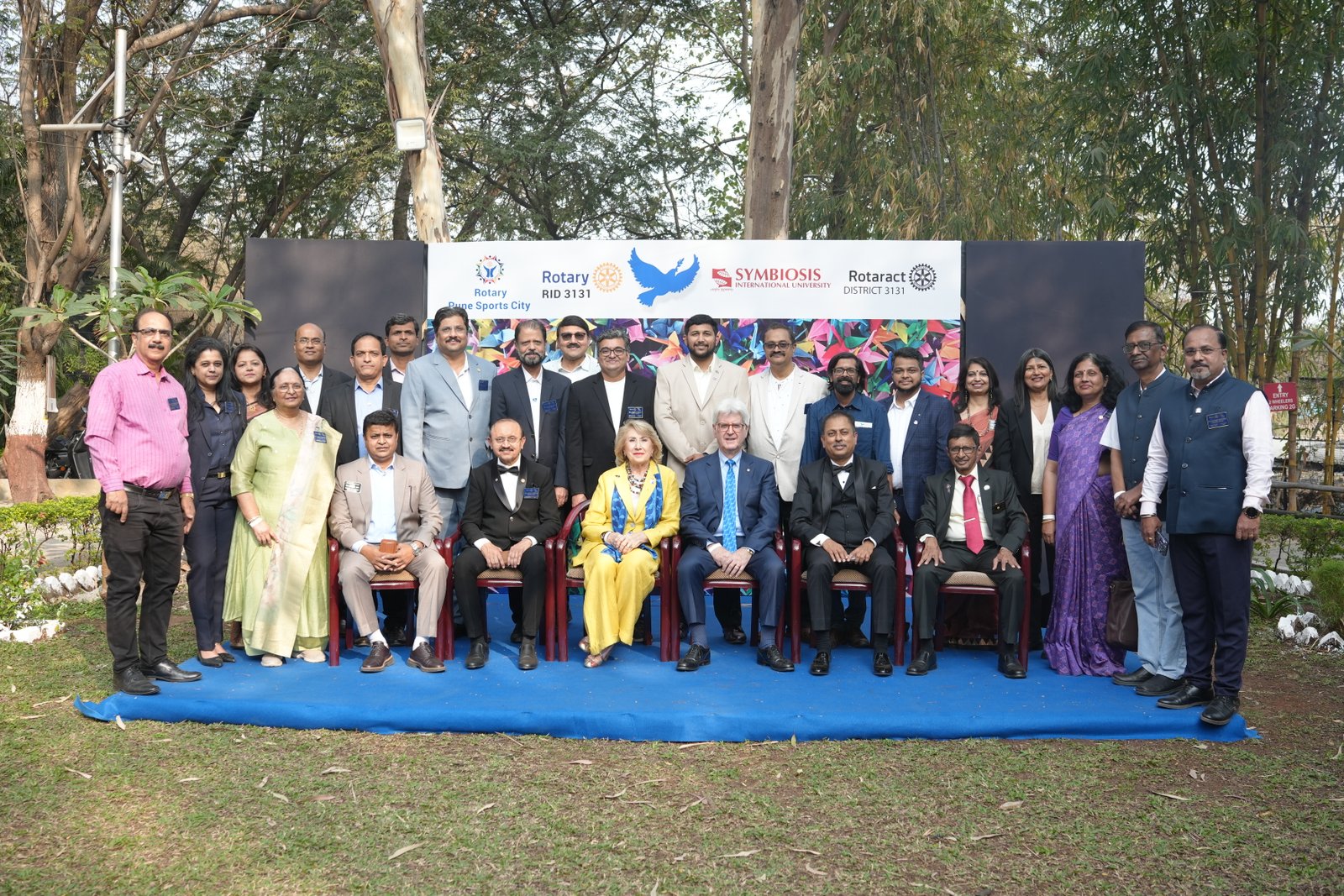
With the financial support of the Rotary Club of Pune Sports City, a total of 1,775 smokeless stoves were distributed to women in tribal communities across Ambegaon Taluka during 2024–25.
This intervention has delivered multi-dimensional impact:
- 40–50% reduction in firewood consumption, significantly lowering deforestation
- Improved respiratory health by reducing indoor smoke exposure
- Time savings for women previously engaged in fuel collection and traditional cooking
With guidance from Shashwat Trust Junnar (STJ) and Rotary members, women productively utilized this saved time to undertake income-generating activities, primarily in dairy farming and floriculture.
A) Dairy Livelihood Initiative: In 2025–26, STJ launched two dairy projects in Malin and Mahalunge villages.
Key Outcomes:
- 187 women farmers engaged
- Daily milk collection of approximately 1,800 litres
- Average daily revenue of ₹80,000
Women are actively involved in livestock care, milking, and operations. Despite fodder challenges, the initiative has created a stable and recurring income stream, strengthening household financial resilience.
B) Floriculture Initiative: Floriculture was introduced in Panchale, Asane, and Shendewadi villages, with 50 families participating.
Project Inputs:
- Distribution of 30,000 saplings (Marigold and Kafry – Indian Chrysanthemums)
- Cultivation on previously underutilized rice fields
- Training and continuous guidance provided
Market Linkages:
- Sales in Pune, Kalyan, and Mumbai markets
- Pune prices: ₹80–90/kg
- Kalyan (3 March 2026): 875 kg sold at ₹40–50/kg
Production & Income:
- Harvest frequency: 8–10 cycles per month
- Expected yield: up to 1,500 kg per cycle
- Estimated farmer income: ₹25,000–₹40,000 over 3–4 months
Floriculture has proven to be:
- Low investment
- Short duration (3 months)
- High-return activity
Scalability
- Expansion planned to 200–250 farmers in 2026–27
- Seed-saving initiatives already underway
This intervention is helping reduce seasonal migration by creating local livelihood opportunities.
Adivasi Division leadership has indicated that floriculture will be integrated into future tribal development programs due to its demonstrated success.
C) Impact of Smokeless Stove Distribution: The distribution of smokeless stoves remains the foundation of this integrated development model.
Key Benefits:
- ~50% reduction in firewood usage
- Use of small twigs and agricultural residue as alternative fuel
- Significant reduction in indoor air pollution, reducing respiratory illnesses
- Time savings enabling economic participation of women
Environmental Impact
- Reduced tree cutting
- Lower environmental degradation
- Promotion of sustainable fuel practices
Health Impact
The Medical Officer at Adivare Primary Health Centre has reported a notable decline in respiratory illnesses, especially among women and children, over the past year.
Community Demand & Sustainability
Encouraged by visible benefits, over 2,000 additional families have expressed interest in adopting smokeless stoves.
This strong demand reflects:
- Community acceptance
- Sustainability of the intervention
- Potential for scale-up
Conclusion:
This project demonstrates how a simple technological intervention—smokeless stoves—can catalyse:
- Health improvements
- Environmental conservation
- Women’s empowerment
- Sustainable livelihoods
The convergence of Rotary support and grassroots implementation by Shashwat Trust Junnar has created a replicable and scalable rural development model.
Acknowledgment:
Shashwat Trust Junnar expresses sincere gratitude to the Rotary Club of Pune Sports City for supporting this high-impact, multi-benefit initiative.
Compiled by:
Rtn. Sandesh Savant, +91 98220 91102
With inputs from: Budhaji Damse, Founder – Shashwat Trust Junnar, +91 72189 41466